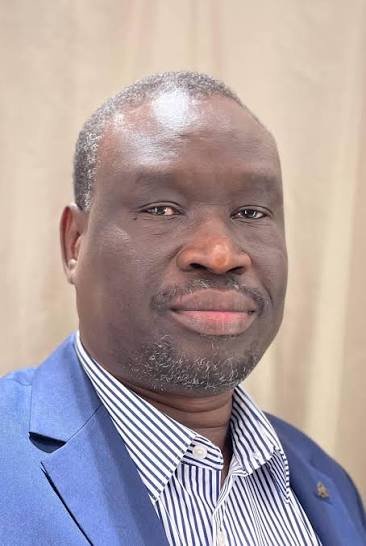

A South Sudanese political commentator has been held in the United Arab Emirates for a year without charge, Human Rights Watch says, amid growing scrutiny of Abu Dhabi’s treatment of critics of its foreign allies.
Samuel Peter Oyay was arrested at his home in Dubai on 30 September 2025 by Emirati security officers in civilian clothes, according to a source cited by Human Rights Watch (HRW).
The officers searched his home for about two hours and did not show his family an arrest warrant or explain why he was being detained, the source said.
Mr Oyay, who fled South Sudan in 2014 fearing for his safety, had been living in the UAE, where he ran a private business and wrote regularly for independent South Sudanese media platforms.
His articles frequently criticised corruption and South Sudan’s political leadership.
His last article, published nine days before his arrest, criticised the trial of opposition leader Riek Machar.
Mr Oyay described the trial as a political attempt by President Salva Kiir to weaken a rival rather than a genuine effort to deliver justice, according to HRW.
Machar’s trial was still under way when President Kiir dissolved South Sudan’s transitional government on 22 September 2026.
HRW says Emirati authorities allowed Mr Oyay to make a phone call to his family about two weeks after his arrest, but his whereabouts were not disclosed to relatives for about five months.
In February, he told a source that he was being held at al-Wathba prison. He was transferred to another prison in March.
His family was finally allowed to visit him on 8 July, after an earlier scheduled visit was cancelled because he had been moved to another facility.
He is reportedly allowed one short telephone call a week.
“Emirati authorities should immediately release Samuel Oyay, who has been held for a year without charge,” said Joey Shea, HRW’s senior UAE researcher.
HRW says the case highlights concerns over UAE laws that allow state security authorities to detain people for extended periods without judicial oversight.
The UAE’s criminal procedure law says detainees should be brought before a public prosecutor within 48 hours. However, HRW says state security legislation provides wider detention powers.
The case also comes as relations between the UAE and South Sudan have strengthened.
President Kiir visited the UAE at least three times in 2025, while a UAE company signed a reported €12bn ($12.9bn) oil-for-cash agreement with South Sudan in 2024.
HRW has previously documented cases involving South Sudanese critics in exile who were allegedly disappeared or forcibly returned with the involvement of South Sudanese authorities.