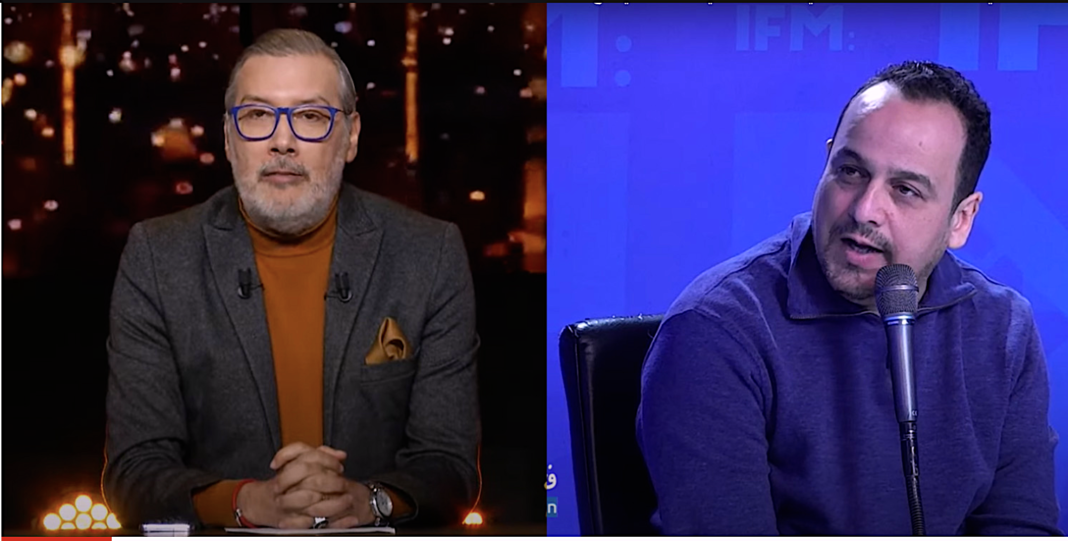

Journalists Borhen Bsaies (left), Mourad Zghidi (right)
Friday, 31 July 2026 | Author: Andrew Michael | Youtube screenshot | GT-News |
Tunisia is facing mounting international pressure after a coalition of 47 press freedom and human rights organizations demanded the immediate release of jailed journalists, warning that the country’s media crackdown has reached alarming levels.
The Committee to Protect Journalists (CPJ), the International Freedom of Expression Exchange (IFEX) and 45 other organizations issued a joint statement on Thursday accusing Tunisian authorities of using politically motivated prosecutions and restrictive laws to silence journalists, critics and human rights defenders.
The groups said Tunisia’s press freedom has steadily declined since President Kais Saied’s consolidation of power in 2021, with journalists increasingly facing arrests, prosecutions and prison sentences for reporting on government policies, corruption and human rights issues.
Three journalists—Zied el-Heni, Mourad Zghidi and Borhen Bsaies—remain behind bars. Political commentator Sonia Dahmani and journalists Haythem el-Mekki and Khaoula Boukrim have also been sentenced, with the latter two convicted in absentia.
At the center of the crackdown is Decree Law 54, a cybercrime law introduced in 2022 that criminalizes the publication of information authorities deem to be “false news.” Press freedom advocates say the vaguely worded legislation has become a powerful tool to suppress independent journalism and intimidate government critics.
The organizations also expressed grave concern over the conditions faced by imprisoned journalists during Tunisia’s intense summer heat. According to the statement, detainees are transported in windowless prison vans while handcuffed and deprived of water for extended periods, exposing them to dangerous temperatures and increasing health risks.
The coalition called on Tunisian authorities to immediately release all journalists imprisoned for their work, end the misuse of the justice system against the media, repeal laws that restrict freedom of expression, and uphold Tunisia’s obligations under international human rights standards.
Once hailed as the Arab Spring’s democratic success story, Tunisia is now drawing growing international criticism as press freedom groups warn that independent journalism is increasingly being treated as a crime rather than a cornerstone of democracy.