
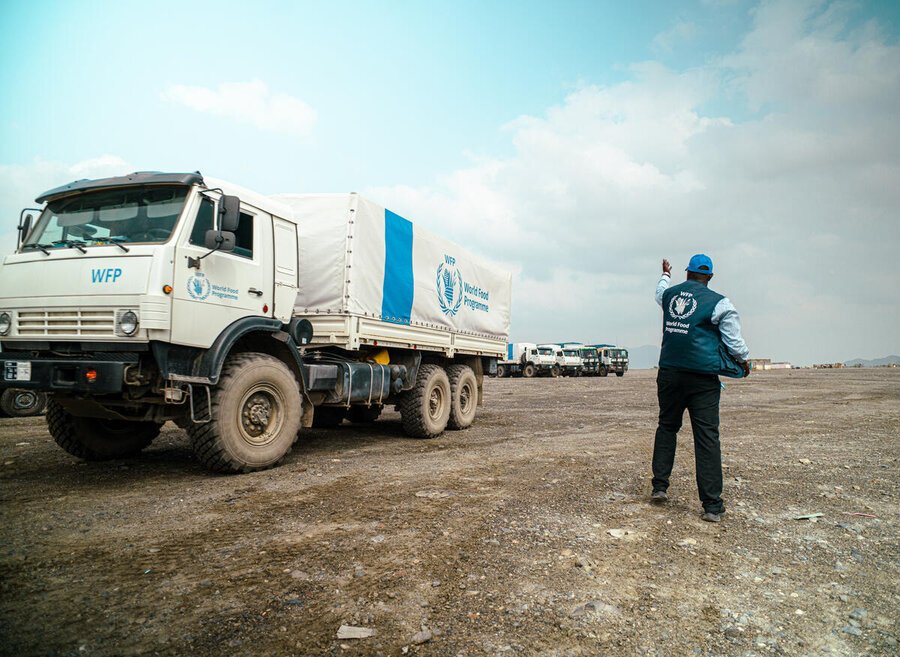

A UN food convoy in South Sudan has been forced to surrender more than 162 tonnes of food aid after armed youth threatened humanitarian workers at gunpoint, the World Food Programme (WFP) says.
The incident happened on 29 September in Chuilbong, Ayod County, in Jonglei State, as the convoy was travelling towards the government-controlled town of Mogok.
WFP said two of its humanitarian staff were assaulted and threatened by armed youth who blocked the delivery of the food.
The agency said the confrontation took place in the presence of local authorities and followed extensive negotiations aimed at securing safe passage for the convoy from Chuilbong to Mogok in northern Ayod and then towards Ayod South.
But the negotiations failed to guarantee the safety of the convoy.
With continued resistance and local authorities unable to ensure safe passage or effectively control the situation, WFP said it was forced to order its convoy team to offload the food under duress to protect its personnel.
An estimated 162.54 metric tonnes of food assistance was removed from the convoy.
The supplies were intended to feed about 4,400 vulnerable people in Mogok for three months, according to the UN agency.
WFP strongly condemned the incident, saying humanitarian workers must be allowed to deliver life-saving assistance safely and without interference.
The incident is likely to deepen concerns over humanitarian access in South Sudan, where insecurity and armed violence have repeatedly disrupted aid operations and put humanitarian workers at risk.
South Sudan remains one of the world’s most severe humanitarian crises, with millions of people relying on humanitarian assistance amid conflict, displacement, food insecurity and economic hardship.
For communities in areas already struggling to access food, interruptions to aid deliveries can have serious consequences.
The incident also raises questions about the ability of local authorities to protect humanitarian operations in areas where armed groups or communities can prevent aid from reaching its intended beneficiaries.
WFP did not identify the armed youth involved or say whether any arrests had been made.
It said humanitarian assistance should never be obstructed or diverted and called for the safety of humanitarian personnel and the unhindered delivery of aid to people in need.
The food convoy was part of wider humanitarian efforts to reach vulnerable communities in Jonglei, one of South Sudan’s states repeatedly affected by conflict, displacement and difficult access.
The loss of the supplies means thousands of people in Mogok could face a prolonged wait for food assistance intended to sustain them for the next three months.
South Sudan’s worsening humanitarian and security crisis
The attack on the WFP convoy comes against a backdrop of a deepening humanitarian crisis in South Sudan, where conflict, displacement, flooding, food insecurity and economic hardship have left millions of people dependent on humanitarian assistance.
The country has faced renewed violence in several areas despite the 2018 peace agreement that ended much of the civil war. Fighting and communal clashes, particularly in Jonglei, Upper Nile and parts of the Greater Equatoria region, have displaced civilians, disrupted livelihoods and made it increasingly difficult for humanitarian agencies to reach communities in need.
Jonglei has been particularly affected by armed violence and intercommunal conflict. Poor roads, seasonal flooding and insecurity often leave river and road corridors as some of the few available routes for delivering food and other essential supplies.
Humanitarian workers have also increasingly become targets of violence. Aid agencies have reported attacks, threats, looting, intimidation, road ambushes and restrictions on their movements. In some cases, humanitarian personnel have been killed while carrying out relief operations.
The United Nations has repeatedly warned that attacks against aid workers and interference with humanitarian operations are putting lives at risk and preventing assistance from reaching vulnerable civilians.
According to UN humanitarian agencies, 36 humanitarian personnel and contractors were killed in South Sudan between January and August 2026, compared with 31 recorded throughout 2025. More than450 incidents affecting humanitarian operations were reported between January and July 2026, highlighting the increasingly dangerous operating environment.
The violence comes as humanitarian needs remain exceptionally high. About 10 million people are estimated to require humanitarian assistance, while more than 7.5 million people face acute food insecurity.
The situation is particularly severe for communities trapped in conflict-affected areas, where insecurity can prevent farmers from accessing their fields, disrupt markets and force families to flee their homes.
For humanitarian organisations, the security threats also come at a time of severe funding constraints. International funding cuts have reduced the capacity of aid agencies to maintain programmes, transport supplies and sustain field operations.
The forced offloading of WFP food in Ayod therefore reflects a wider challenge facing humanitarian organisations: aid may be available, but insecurity and interference can prevent it from reaching the people for whom it was intended.
International humanitarian law requires parties to protect civilians and facilitate the rapid and unimpeded passage of humanitarian relief. Attacks, threats and deliberate obstruction of humanitarian workers can undermine that access and further endanger communities already facing hunger and displacement.