
Thursday, 13 August 2026 |Guest writer | Torit, Eastern Equatoria State | Credit: AMDISS Facebook |
Health officials and media practitioners in South Sudan’s Eastern Equatoria State have called for greater openness in discussing sexual and reproductive health, saying cultural taboos and misinformation are putting lives at risk.
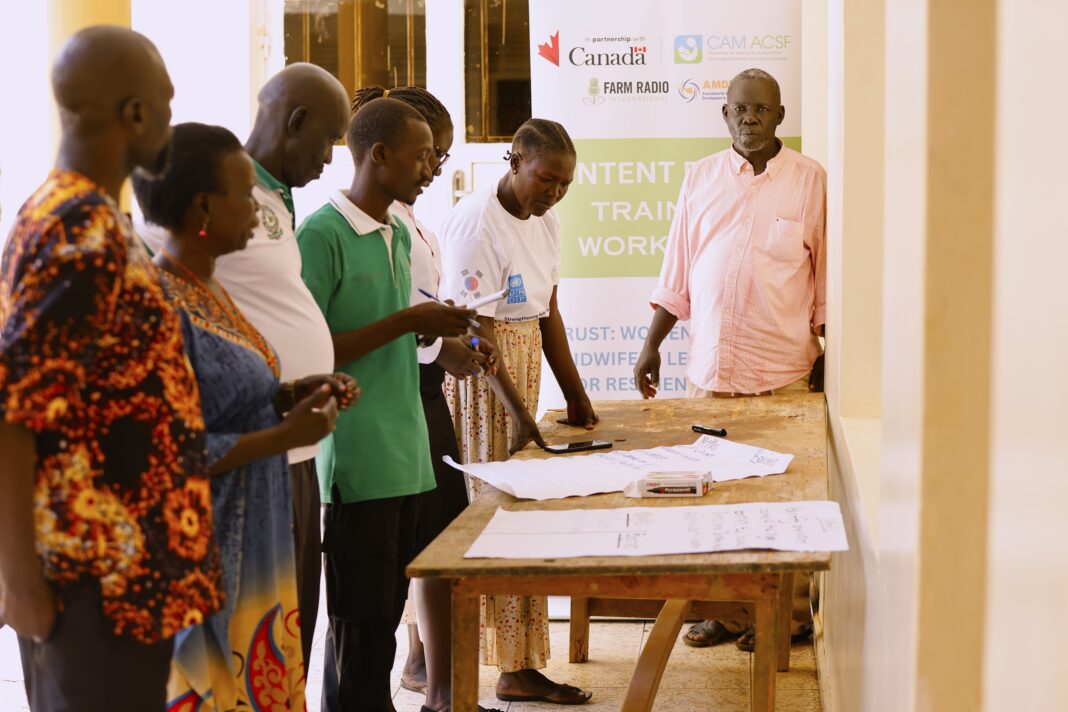
The call was made during a three-day workshop in Torit organised by the Association for Media Development in South Sudan (AMDISS) in partnership with the Canadian Association of Midwives (CAM/ACSF), Farm Radio International and Global Affairs Canada.
The workshop, held under the theme “TRUST: Women’s Voices, Midwifery Leadership for Resilient Health,” is bringing together media, health and gender stakeholders to develop radio programmes on women’s health, reproductive rights and gender equality.
Eastern Equatoria State Minister of Information and Communication Elia John Ahaji said sensitive health issues should no longer be surrounded by silence.
“It is time for us to say yes; it is the right thing. We should talk about sex issues with our teenagers, with our children,” he said, urging families to provide young people with accurate information.
State Director General for Health Dr Amin Gordiano said the media had an important role in providing reliable health information, but warned that inaccurate messages could have serious consequences.
“Women must have greater opportunities to participate in health communication,” he said.
AMDISS Advocacy and Communication Manager Juma Peter Maya said the workshop would allow participants to help shape the radio content, with about 15 programmes potentially produced.
He said participants would also identify suitable terms in English, Juba Arabic and local languages to ensure sensitive health messages are clearly understood.
The initiative aims to strengthen collaboration between journalists and health workers while giving women a greater voice in conversations about their health.