
United Nations Security Council
Tuesday, 21 April 2026 | Author – Alex Onyango | New York | File Photo | GT-News |
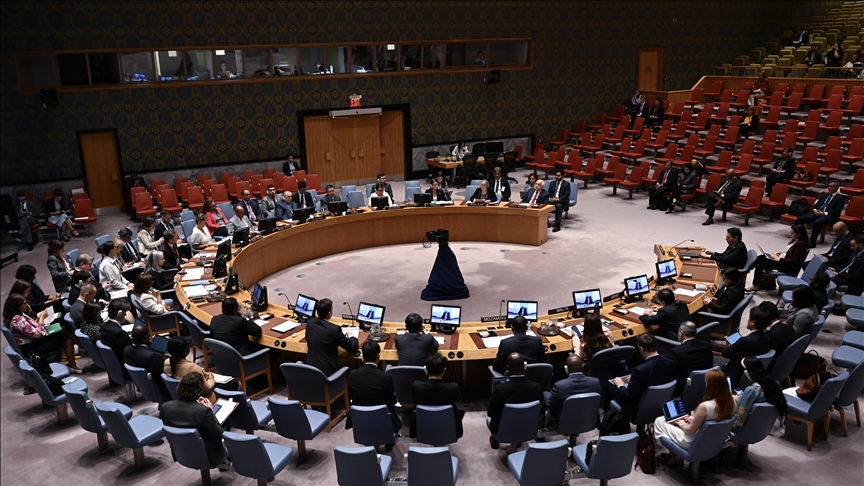
China and Russia have called on the international community to respect South Sudan’s sovereignty, as divisions emerged at the United Nations Security Council over how to address the country’s fragile peace process.
Speaking during a Council session on Friday, China’s deputy permanent representative to the UN, Sun Lei, warned against what he described as “unwarranted interference” in South Sudan’s internal affairs. He said international support should reflect the country’s “actual national conditions” and respect the government’s primary role in managing its transition.
His remarks come amid mounting concern over delays in implementing the 2018 peace agreement, continued violence in parts of the country and a deepening humanitarian crisis.
Recent clashes in Jonglei and Upper Nile states have displaced civilians and caused casualties, underlining the persistent insecurity despite a formal ceasefire. Mr Sun urged all parties to uphold the truce and ensure the protection of civilians and humanitarian workers.
He also called for greater dialogue between communities, saying South Sudan’s diverse ethnic groups “ought to coexist peacefully”.
On the political process, Mr Sun stressed that full implementation of the revitalised peace deal remains essential for long-term stability. He expressed support for planned elections later this year, describing them as a shared aspiration of both the government and the people.
However, his position contrasts with that of the United States and other Western countries, which have stepped up pressure on President Salva Kiir’s government. They accuse authorities in Juba of failing to deliver key reforms, fuelling instability and restricting political space, including through the detention of opposition figures such as Riek Machar.
Russia echoed China’s stance, with its deputy UN ambassador Anna Evstigneeva saying South Sudan needed “substantive assistance, not criticism”.
She described the security situation as volatile, citing renewed fighting in Jonglei, Upper Nile and parts of Greater Equatoria. She said ongoing military operations and clashes involving armed groups were contributing to instability and displacement.
Ms Evstigneeva also raised concerns about the safety of humanitarian workers, warning that attacks against aid staff remain a serious issue.
Western diplomats, however, offered a more critical assessment, warning that South Sudan risks sliding back into widespread conflict. The United States accused the government of actions that could undermine the peace process, including alleged forced displacement of civilians and obstruction of UN peacekeeping operations.
Russia rejected those claims, saying South Sudan’s leadership had reaffirmed its commitment to the 2018 peace agreement, which ended a five-year civil war. It pointed to preparations for elections expected in December as evidence of progress.
The Security Council also discussed the role of the UN peacekeeping mission in South Sudan (UNMISS), which both China and Russia described as “critical” to protecting civilians and maintaining stability. They called for continued cooperation between the mission and the government and cautioned against any reduction in its capacity.
Both countries highlighted the role of regional organisations, including the African Union and the Intergovernmental Authority on Development (IGAD), in supporting mediation efforts.
South Sudan, which gained independence in 2011, is approaching its 15th anniversary in July. Despite significant oil resources, it remains heavily reliant on humanitarian assistance, with conflict, flooding and economic challenges continuing to affect millions.
China, a major investor in South Sudan’s oil sector, has also expanded its involvement in infrastructure and aid projects. But with political tensions unresolved and insecurity persisting, diplomats warn that the coming months — particularly in the run-up to elections — will be crucial for the country’s stability.