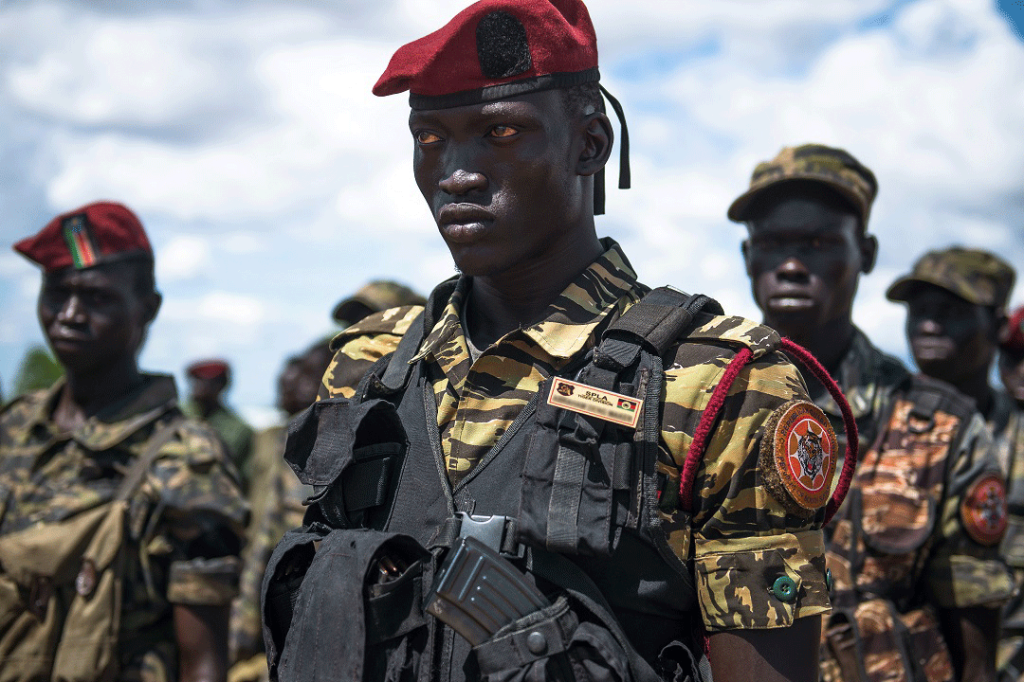

South Sudan’s soldiers in Juba. | File photo|.
National Security Service elements deployed at the Universal Printing Press Limited in Juba removed a front-page news article from the No. 1 Citizen Daily Newspaper, according to sources in Juba.
Some sources who spoke to Golden Times on condition of anonymity said the security agents replaced the lead story with the second lead, citing the sensitivity of the article.
“The final artwork was sent for printing but the security agents decided to remove the lead article titled: Injustice: Legal expert cites human rights violations in Kalisto’s case,” he said.
“Previously, the newspapers used to circulate with blank pages but now the security agents have devised a new way of concealing their media censorship. They remove and replace the blank page with any other soft news article or sometimes, they get an article from a website to cover the blank space so that the international community would not notice the censorship,” he added.
The article removed was a legal analysis of the case of former Mayor of Juba City Council, Kalisto Ladu who was released from the National Security detention facility last week Friday.
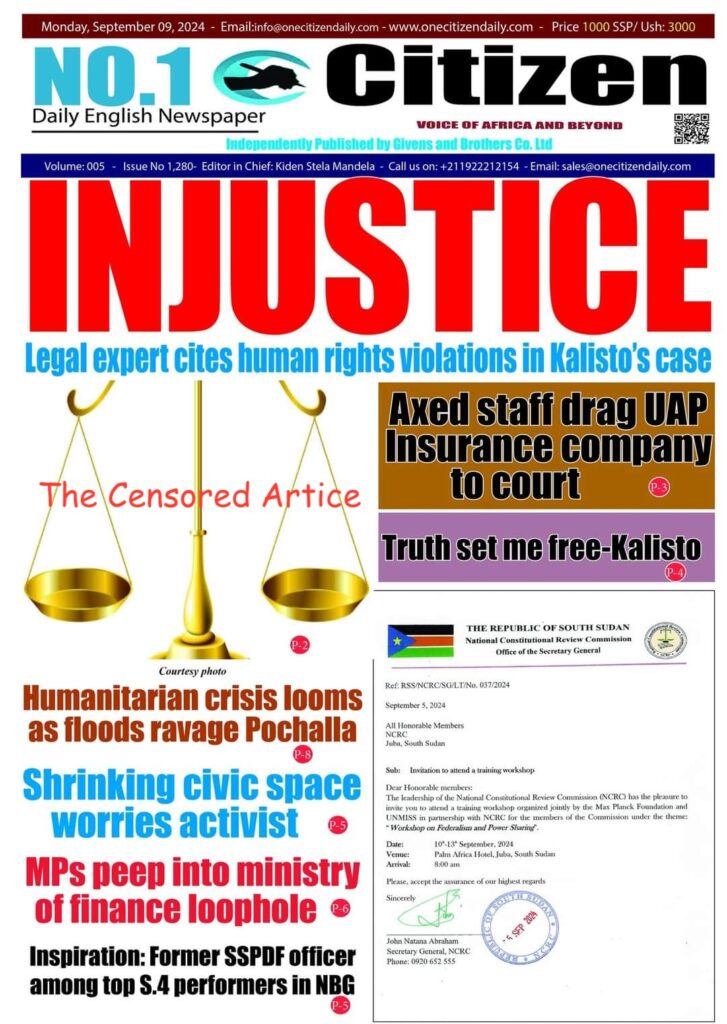
The original layout of No.1 Citizen Newspaper with the lead story about the case of Kalisto Ladu
The National Security Service arrested Kalisto for criticizing the government’s handling of state affairs and instigating land-grabbing, killing, and displacement of the indigenous people from their villages around the national capital, Juba.
When contacted for comment, the Spokesperson of the National Security Service and Director for Public Relations David John Kumuri rejected the allegation of article removal and cited that there are no security agents deployed at the printing press facilities in the national capital, Juba.
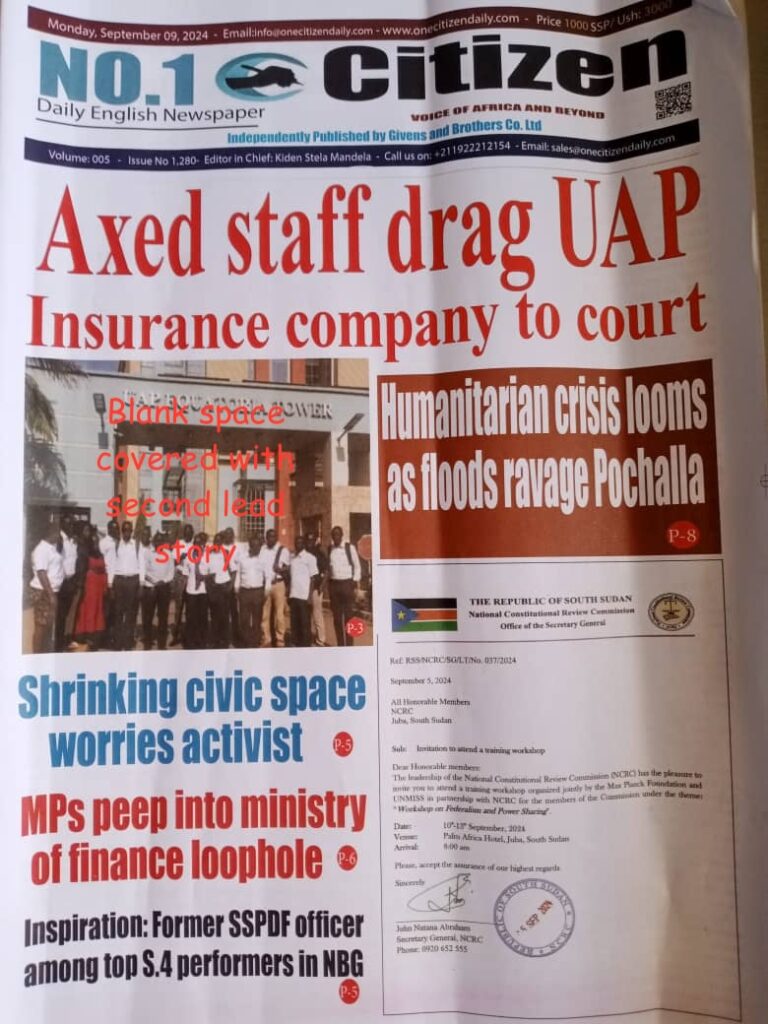
The layout of the article replaced by the National Security Service
The South Sudan’s media regulatory body, The Media Authority declined to answer several phone calls for comments over this development.
Previously, Information Minister Michael Makuei Lueth admitted that indeed, the government’s security agents have been removing critical news articles from the newspapers. Makuei asserted that the articles removed before printing were inciting unrest in the country.
South Sudan gained independence from Sudan in 2011, yet it adopted Sudan’s style of media suppression and cracking down on independent views shared through the media.
Despite the calls from the international community for the government of South Sudan to open up the civil and political space to allow the citizens to participate fully in the decision-making, the country’s Spokesperson of the Parliament, Oliver Mori Benjamin on Monday (2 September) issued directives barring the journalists not accredited by the Media Authority from covering the parliament’s sittings.
Mori stated to The Dawn Newspaper that the directive was engineered by the Media Authority to parliament.
“We have been served with a letter from the authority that any journalist who is not accredited will not be allowed to cover sittings of the parliament, and not only of the parliament even in all the government institutions,” Mori said.
He said that security officers at parliament would implement the guidelines issued by the media authority.
“They are all about 116 journalists but I can see the number is great so as of tomorrow we are going to implement this. Any journalist coming to the parliament will be required to produce his accreditation card,” Mori said.
He disclosed that they have been served with a list of names of all the accredited journalists in the country.
Mori noted that accredited journalists would be subjected to a verification process for authenticity to ensure that the details captured on the security code on their press cards match their particulars.
“Those who don’t have that press cards we will tell them to go back to the media authority to get that card. I think this is very important for our journalists so that we all move orderly,” he said.
He encouraged practicing journalists who have not yet acquired the accreditation to apply for it.
The media authority is a regulatory institution tasked with overseeing media operations in the country. It has so far accredited over 116 journalists.