
Wednesday, 9 September 2026 |Author: Andrew Michael | AFP/John Macdougall|
A German journalist who spent five months in detention in Syria has described allegations of torture and harsh prison conditions, and called on the Syrian and Turkish authorities to reveal the whereabouts of her colleague, Ahmed Polad.
Eva Maria Michelmann and Mr Polad, a Kurdish-Turkish journalist, were detained on 18 January while reporting in the northern Syrian city of Raqqa as Syrian government forces advanced into territory controlled by the Kurdish-led Syrian Democratic Forces (SDF).
Ms Michelmann was released on 19 June, but there has been no recent official information about Mr Polad, who worked as a producer and reporter for the Etkin News Agency and Özgür TV.
In an interview, Ms Michelmann said she was questioned about alleged links to Kurdish armed groups and was denied access to a lawyer, a telephone and the German embassy for much of her detention.
She said one of her interrogators accused her of potentially working with the Kurdistan Workers’ Party (PKK), despite her insistence that she had been in Raqqa to report on events.
“No clear legal basis for my continued detention was presented to me,” she said.
Allegations of torture
Ms Michelmann also described what she said she witnessed inside Syrian detention facilities.
She alleged that beatings and electric shocks were widespread, saying she encountered women with burns and other injuries who told her they had confessed to crimes simply to stop the torture.
She also described women being suspended by their hands and beaten, others suffering broken legs, and a case in which detainees were allegedly left locked inside a cell during a bombardment.
She said she was held in six locations in Aleppo, Idlib and Damascus.
At one prison in Damascus, she said, 15 women were confined to a space of about 16 square metres, with the toilet also being used as a shower.
The Syrian authorities dispute parts of Ms Michelmann’s account.
Omar Haj Ahmed, director general of press affairs at Syria’s Ministry of Information, said she had been detained in Raqqa and later transferred to Aleppo. He denied that she had been held in detention facilities in Idlib or Damascus, apart from being taken to Damascus on the day she was handed over to German authorities.
He also disputed her claim that she had been in Raqqa solely to work as a journalist, saying authorities had identified her as affiliated with the SDF and that she did not have documents proving her journalistic work.
The claims cited by Mr Haj Ahmed were not provided for independent verification.
Fears for missing colleague
Ms Michelmann said she was separated from Mr Polad several days after their detention.
She said she later learned that he had last been seen with injuries to his abdomen and hand, although he had not been injured when she last saw him in detention.
She said Mr Polad had told her he feared for his life if he remained in Syrian custody or was extradited to Turkey because of his identity as a left-wing Kurdish journalist.
“I believe his reported injuries are a clear indication that he may have been subjected to severe physical abuse,” she said.
She called on Syria and Turkey to disclose Mr Polad’s whereabouts and condition and urged Germany to provide him with humanitarian protection.
“The authorities must allow him to communicate with his lawyer and family, disclose any charges against him, and protect his life and physical integrity,” she said.
Syria’s Interior Ministry did not respond to requests for comment, while the Committee to Protect Journalists said it had also contacted Turkish authorities about what action they had taken on Mr Polad’s behalf but received no response.
Test for Syria’s new authorities
The detention of the two journalists comes as Syria’s transitional authorities face scrutiny over their commitment to press freedom following the fall of Bashar al-Assad’s government in 2024.
Officials have pledged to uphold press freedom, but journalists continue to face reports of attacks, arbitrary detention, enforced disappearances, censorship and legal restrictions.
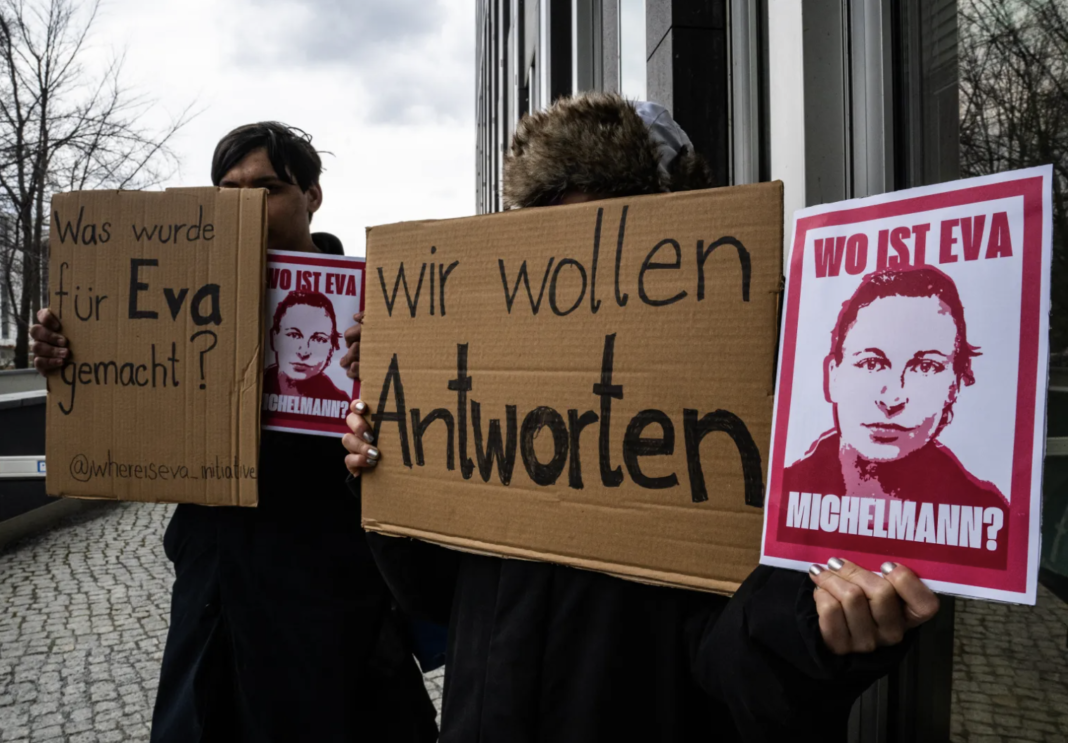
For Ms Michelmann, international pressure was crucial to securing her release.
“Critical journalism, public pressure, and solidarity save lives,” she said.
She said she believed that without sustained pressure from journalists and human rights activists, she could have simply disappeared.