

Tuesday, 12 May 2026 | Author: Andrew Michael | File Photo| GT-News |
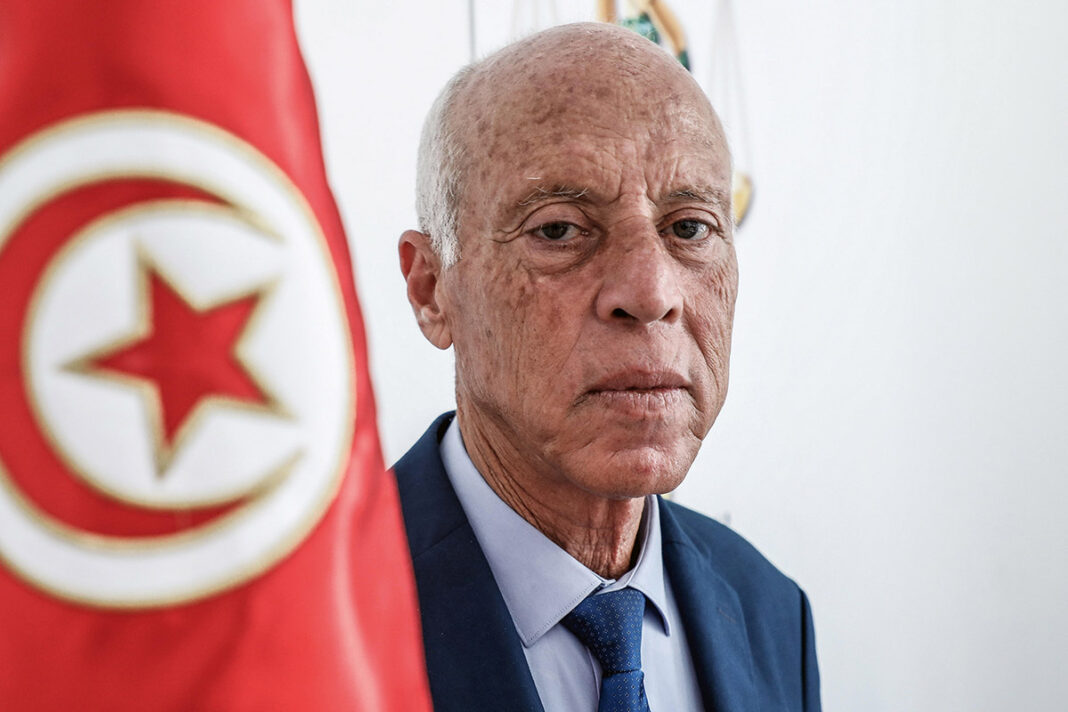
Tunisian authorities are increasingly using financial restrictions, legal prosecutions and administrative measures to suppress independent journalism, the Committee to Protect Journalists (CPJ) said Tuesday, warning of a sharp decline in press freedom under President Kais Saied.
The New York-based media watchdog said Tunisia had moved far from the relative openness that followed the country’s 2011 revolution, when journalists gained unprecedented freedom to investigate corruption and criticise authorities.
“Authorities now move beyond targeting journalists to dismantling the conditions that allow press freedom to exist,” CPJ Chief Programs Officer Carlos Martinez de la Serna said.
The group accused Tunisian authorities of relying heavily on Decree-Law 54, introduced by Saied in 2021, to criminalise online speech and prosecute journalists and commentators.
Political commentator and lawyer Sonia Dahmani was sentenced in April to 18 months in prison, while independent newspaper editor Ghassen Ben Khelifa received a two-year sentence in March, according to CPJ.
Although neither is currently detained, CPJ said the possibility that the sentences could be enforced at any time had created a climate of intimidation.
“Tunisian authorities have turned Sonia’s freedom into a threat,” her sister Ramla Dahmani told CPJ. “By keeping the sentence hanging over her, they’re forcing us into silence.”
CPJ said Dahmani faced at least five separate legal cases linked to her public commentary.
The organisation also highlighted the case of journalist Zied el-Heni, editor-in-chief of Tunisian Press, who was sentenced on May 7 to one year in prison after criticising judicial authorities on Facebook.
“My father is being prosecuted simply for doing his job as a journalist,” his daughter Ela el-Heni told CPJ.
Beyond speech-related prosecutions, authorities are increasingly using financial crime allegations against journalists, the watchdog said.
Radio journalists Mourad Zghidi and Borhen Bsaies, initially prosecuted under Decree 54 after their arrests in 2024, were later investigated for alleged money laundering and illicit enrichment.
In January, a Tunis court sentenced both men to three-and-a-half years in prison, alongside fines and asset seizures.
CPJ said authorities were also targeting media outlets and civil society organisations through banking restrictions, audits and suspension orders.
The watchdog cited the case of Al Khatt, the association behind investigative outlet Inkyfada, which faces dissolution proceedings scheduled for a June hearing.
According to Inkyfada co-founder Malek Khadhraoui, the organisation has faced repeated freezes on bank transfers and prolonged administrative scrutiny since late 2023.
“The most damaging obstacle has been the banking restrictions,” Khadhraoui told CPJ.
Independent outlets Tumedia and Nawaat have also faced funding restrictions and suspensions, according to the report.
CPJ urged Tunisian authorities to stop using Decree 54 against journalists, protect independent media organisations and end attempts to restrict civil society funding.
The organisation said Tunisian authorities did not respond to its request for comment.