
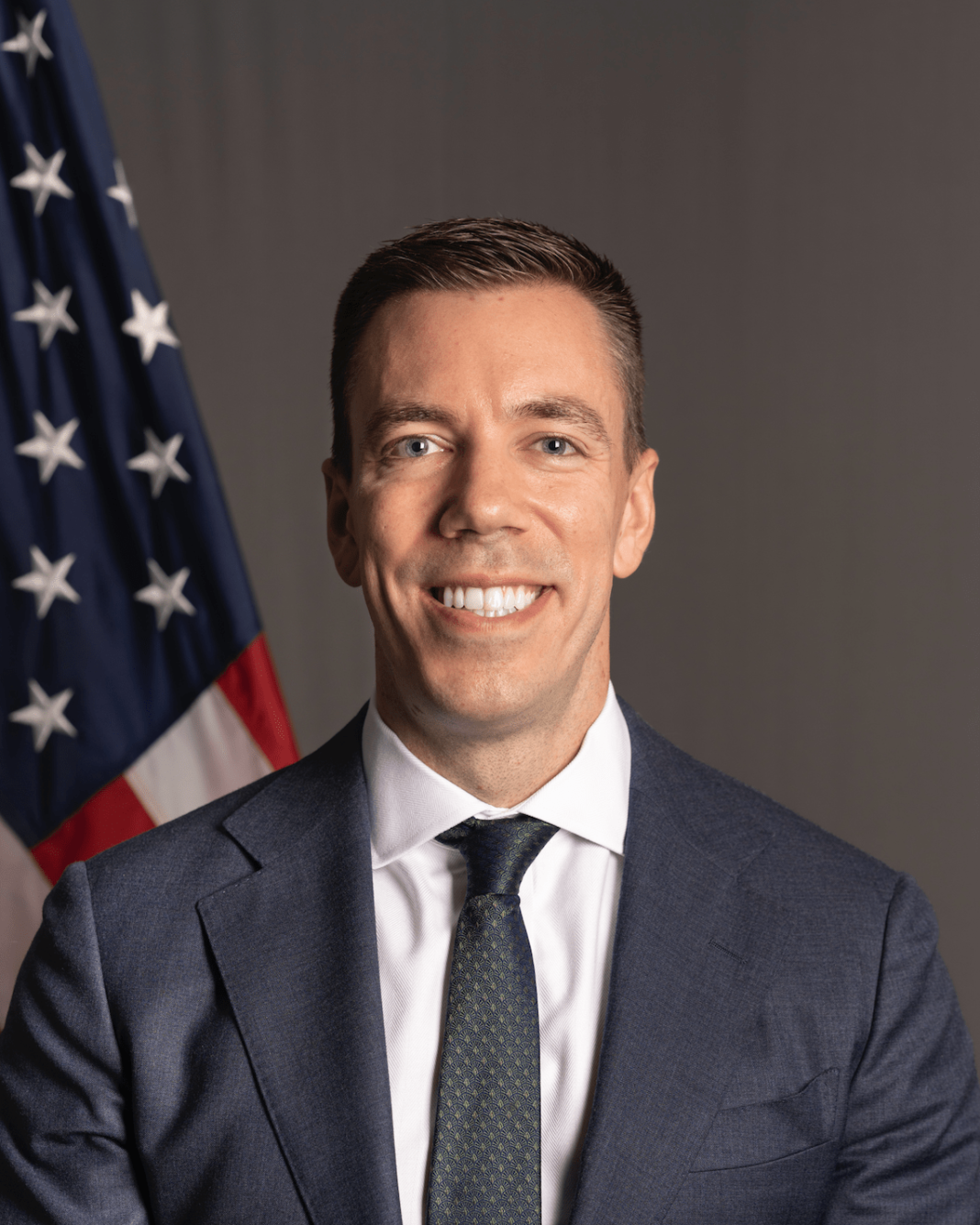

Nick Checker
Monday, 20 April 2026 | Author – Alex Onyango | Nairobi-Kenya | File Photo | GT-News |
The United States is “resetting” its relationship with Africa to focus on trade, investment and strategic interests rather than traditional aid, a senior State Department official has said.
Speaking in Washington, DC, on 19 March, Nick Checker, Senior Bureau Official for African Affairs, outlined what he described as a new approach based on “mutually beneficial partnerships” and economic cooperation.
The policy marks one of the clearest statements yet of the Trump administration’s Africa strategy, built around three pillars: commercial diplomacy, a rethink of foreign assistance, and a more pragmatic approach to conflict resolution.
Shift to ‘trade not aid’
At the centre of the strategy is a push to deepen economic ties with African countries and expand US private sector involvement.
Mr Checker said the administration was treating African nations as “capable commercial partners” rather than aid recipients, with the aim of boosting US exports and securing supply chains.
He highlighted Africa’s economic potential, noting that nine of the world’s 20 fastest-growing economies are on the continent and that its population is projected to reach 2.5 billion by 2050.
US officials say they have already supported more than 60 deals worth over $25bn (£20bn), with a focus on infrastructure, energy and critical minerals.
Africa plays a central role in global competition for resources such as cobalt, copper and rare earth elements, and Washington is seeking to position itself as a key partner in developing these sectors.
Projects in the Democratic Republic of Congo, including mining investments and the Lobito Corridor transport initiative, were cited as examples of this growing engagement.
Tougher conditions on aid
The administration is also introducing stricter conditions on foreign assistance, framing it as a tool to advance US national interests.
Mr Checker said aid would be “conditional, targeted” and subject to greater accountability, with a “zero-tolerance” approach to corruption and misuse.
Countries that do not align with US priorities could face reductions in support, he warned, adding that aid should not replace effective governance.
South Sudan was cited as an example where emergency assistance risks being misused, reflecting broader concerns about accountability in fragile states.
The US says its goal is to promote self-reliance, including through bilateral agreements designed to give governments more control over sectors such as health.
Pragmatic diplomacy and security
On diplomacy, the US signalled a move away from promoting democratic norms as a central focus, instead emphasising engagement based on shared interests.
Mr Checker said Washington would work with governments “as they are”, arguing that public pressure on governance issues is often ineffective.
The US is supporting efforts to resolve conflicts across the continent, including tensions between Rwanda and the Democratic Republic of Congo and the ongoing war in Sudan.
At the same time, it is encouraging regional actors to take greater responsibility for security challenges, particularly in the Sahel, where jihadist violence has spread.
Energy and investment
Energy development is expected to play a key role in the new strategy.
“Africa needs more energy—and more energy of every kind,” Mr Checker said, adding that the US would support investment and technology transfer without dictating countries’ choices.
Officials say aligning diplomacy with private sector opportunities could unlock further investment across the continent.
Mixed response expected
The policy reflects the Trump administration’s broader “America First” approach to foreign policy, prioritising national interests in international engagement.
While US officials say African leaders have welcomed the emphasis on trade and investment, analysts say the reduced focus on aid and governance could prove controversial.
Questions remain over how the strategy will affect vulnerable populations and whether increased commercial engagement will translate into broad-based development.