
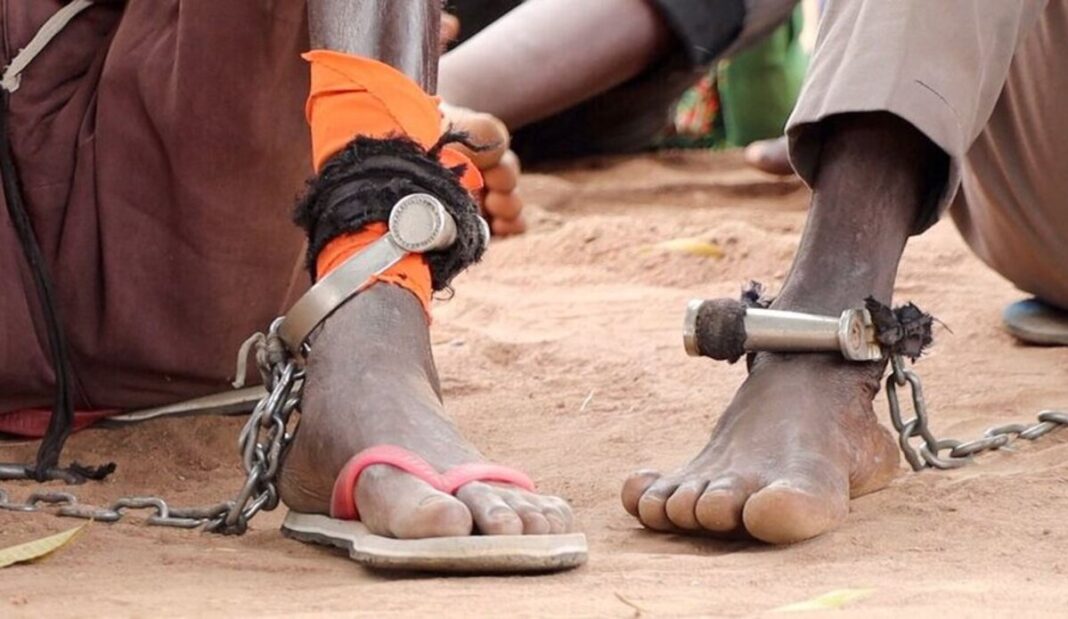

Convicts in South Sudan
Monday, 23 March 2026 | Author – Alex Onyango | Nairobi-Kenya |United Nations| GT-News |
Efforts to extend justice services to hard-to-reach areas of South Sudan are gaining momentum, as United Nations-backed mobile courts continue to hear cases in Central Equatoria and Unity states.
The United Nations Mission in South Sudan (UNMISS), in collaboration with the national Judiciary and the Ministry of Justice and Constitutional Affairs, has supported a series of mobile justice interventions this month aimed at addressing case backlogs and improving access to the rule of law.
In Greater Yei, Central Equatoria State, a mobile court sitting from 4 to 19 March heard 23 cases drawn from Morobo, Yei and Lainya counties. Twelve of these cases were concluded, with eight involving sexual and gender-based violence (SGBV), underlining ongoing concerns about such offences in the region.
Meanwhile, a separate mobile court has been deployed to Southern Unity, where it began operations in Leer on 23 March. The court is expected to handle both criminal and civil matters, including serious crimes such as murder, SGBV and conflict-related sexual violence (CRSV). It will serve communities across Leer, Koch, Mayiendit and Panyijar counties.
In preparation for the court’s launch, UNMISS facilitated the early deployment of prosecutors, investigators and a victims’ advocate to Leer and nearby Rubkuay on 9 March. Since then, more than 100 criminal cases have been reported and are under investigation, including 25 cases related to SGBV. Some of these cases remained pending from previous mobile court sessions held in Leer in 2025.
The mobile courts are supported financially by the Multi-Partner Trust Fund for Reconciliation, Stabilization and Resilience, as well as the Royal Norwegian Embassy in Juba.
UNMISS says the initiative is part of ongoing efforts to strengthen accountability, deliver justice for victims and build public confidence in the legal system, particularly in remote and conflict-affected areas where access to courts remains limited.