
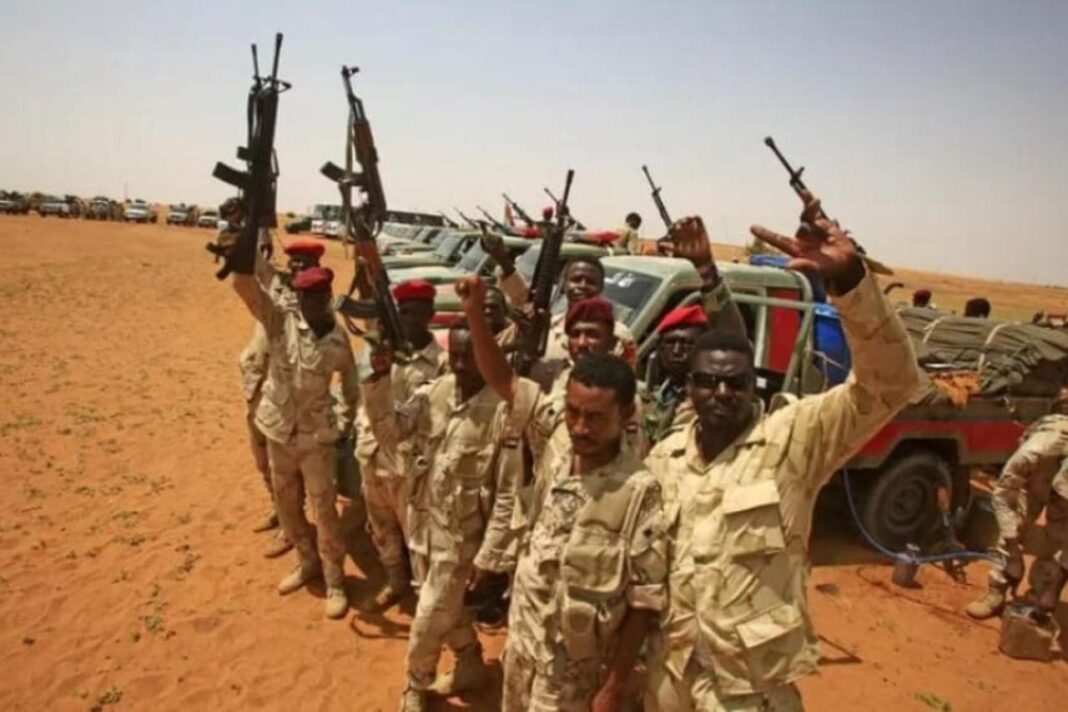

Wednesday, 25 February 2026 | Author – Alex Onyango | Nairobi-Kenya | File Photo | GT-News |
Human Rights Watch said the Rapid Support Forces (RSF)—one of Sudan’s two main warring parties—targeted, abused, and killed people with disabilities during and after their October 26, 2025, takeover of El Fasher, North Darfur’s capital.
The Human Rights Watch disclosed that the RSF singled out people because of their disabilities, accused people with physical disabilities of being injured combatants, and mocked others as “insane,” and told them they were not “complete,” survivors and witnesses said.
“Targeted killings of civilians or others not participating in a conflict, including those with disabilities, are war crimes, as is subjecting them to cruel, humiliating, and degrading treatment or similar outrages. When committed as part of a widespread attack on the civilian population, these acts may constitute crimes against humanity,” the rights body said in a statement.
“The Rapid Support Forces treated people with disabilities as suspects, burdens, or expendable,” said Emina Ćerimović, associate disability rights director at Human Rights Watch. “We heard how they accused some victims, particularly those missing a limb, of being injured fighters and summarily executed them. Others were beaten, abused, or harassed because of their disability, with fighters mocking them as “insane” or for not being a “complete person.”
Human Rights Watch said it interviewed 22 survivors and witnesses from El Fasher between December 2025 and February 2026, including remote in-depth interviews inside Sudan and interviews with people with disabilities who fled to eastern Chad.
The rights body also interviewed eight disability rights activists from other parts of Sudan who described similar RSF abuses in other parts of the country.
The Rapid Support Forces took control of El Fasher on October 26, 2025, after an 18-month siege.
As civilians attempted to flee, Rapid Support Forces attacked them, killing thousands. People with disabilities faced particular difficulties escaping and were at times singled out for abuse, extortion, and execution.
A 33-year-old man who uses crutches for a physical disability acquired from an explosive weapon attack in December 2024 said RSF fighters captured him and about 50 others, including women and children, as they tried to flee the city on October 26, and interrogated them.
“The RSF considered everybody who was missing a hand or a limb to be a soldier,” the man said.He said that RSF fighters also relied on skin color and accent to decide whether they were civilians, or members or supporters of the Sudanese Armed Forces (SAF), which RSF is fighting for control of the country. He said RSF fighters used machine guns and AK-style assault rifles to execute more than 10 people, the majority with physical disabilities, in front of the group.
The 33-year-old said he negotiated with the fighters to allow detainees to call their families to seek ransom payments. One fighter responded: “You are already weak and shattered in pieces, your family wouldn’t want you anyway.”
He was detained for 4 days and released after his family paid 17 million Sudanese pounds and he transferred 13 million Sudanese pounds from his bank account (totaling approximately US$8,830).
A 29-year-old female nurse said she saw RSF fighters kill a young man with Down syndrome, whom the fighters referred to as “insane,” a blind child, and a younger woman with a physical disability who could not walk, as civilians fled on October 26.
Sudanese disability rights activists documented additional cases in which RSF fighters killed people with disabilities because of their disabilities. Zainab Salih, former head of the Association of People with Disabilities in South Darfur, said she spoke with a father whose 14-year-old son with a physical disability was executed as they tried to flee on October 26 because RSF fighters claimed he was “slowing other people down.” Before executing him, she said, RSF fighters took his wheelchair.
Two other disability rights activists provided similar accounts of the Rapid Support Forces killing people with disabilities in other parts of Sudan during the conflict, with a family member saying an RSF fighter said, “let us help you get rid of them.”
People with disabilities also experienced other forms of abuse often based on ethnic targeting. A 31-year-old man who acquired a disability after being injured in shelling at Naivasha market in El Fasher, said RSF fighters beat and whipped him while he was sheltering at his uncle’s house following the fall of the city.
Fighters repeatedly accused him of being an SAF or Joint Forces soldier or sympathizer because of his disability and his ethnic background, calling him a “falangay,” a derogatory term for non-Arab ethnic groups.
Witnesses and survivors described RSF fighters looting fleeing civilians, including of assistive devices or their only means of mobility, such as the wheelbarrows used by the families of people with disabilities to transport them.
Witnesses also described people with disabilities being left behind. A 30-year-old woman fleeing with her 3 children, said: “What’s stayed with me the most is the image of wounded people, including people with disabilities, whose families were trying to evacuate along that road, but they were not able to, [so they] were left behind and no one knows their fate.”
Those who reached Tawila, also in North Darfur, described fleeing under extreme conditions, often without assistive devices or transportation. Some crawled, or family members carried them. Others were separated from their families or support networks, making escape and survival in displacement significantly harder.
They said they lacked access to assistive devices, medical care, and psychosocial support. People with disabilities and their families said the facilities in the Tawila camp for internally displaced people, including bathrooms, were inaccessible for people with physical disabilities.
The 31-year-old man mentioned above, who now advocates for people with disabilities in the Tawila camp, said he has repeatedly asked humanitarian organizations for disability-inclusive services. “The concept here is that if you have a disability, it’s on your family to provide help,” he said.
Under international humanitarian law, parties to a conflict must distinguish, at all times, between civilians and combatants, and civilians may never be the target of attack.
People with disabilities who are not directly taking part in hostilities are entitled to full protection from deliberate attacks and ill-treatment. Deliberate attacks on and ill-treatment of civilians with disabilities are war crimes and may constitute crimes against humanity.
The Convention on the Rights of Persons with Disabilities, which Sudan has ratified, obliges states to ensure the protection and safety of people with disabilities in situations of risk, including armed conflict. United Nations Security Council Resolution 2475 says that parties to armed conflict should protect persons with disabilities and ensure their full inclusion in humanitarian responses.
The United Nations Security Council should urgently act to prevent further atrocities in Sudan against civilians, including those with disabilities, Human Rights Watch said, including by sanctioning the Rapid Support Forces leadership for ongoing atrocities, and publicly calling on the force’s backers, notably the United Arab Emirates, to end their support to the Rapid Support Forces.
“Members of the UN Security Council and the African Union Peace and Security Council should work together to secure the deployment of a civilian physical protection mission in Sudan. Humanitarian agencies should ensure that assistance is accessible and inclusive of people with disabilities, including by providing assistive devices and targeted support,” the rights body urged.
“Human Rights Watch has documented abuses against people with disabilities in armed conflict around the world for over a decade,” Ćerimović said. “But this is the first time we have documented this type and scale of targeted abuse, including killings, of people with disabilities because of their disabilities. Governments and the UN Security Council should act now to stop these crimes and ensure accountability.”