
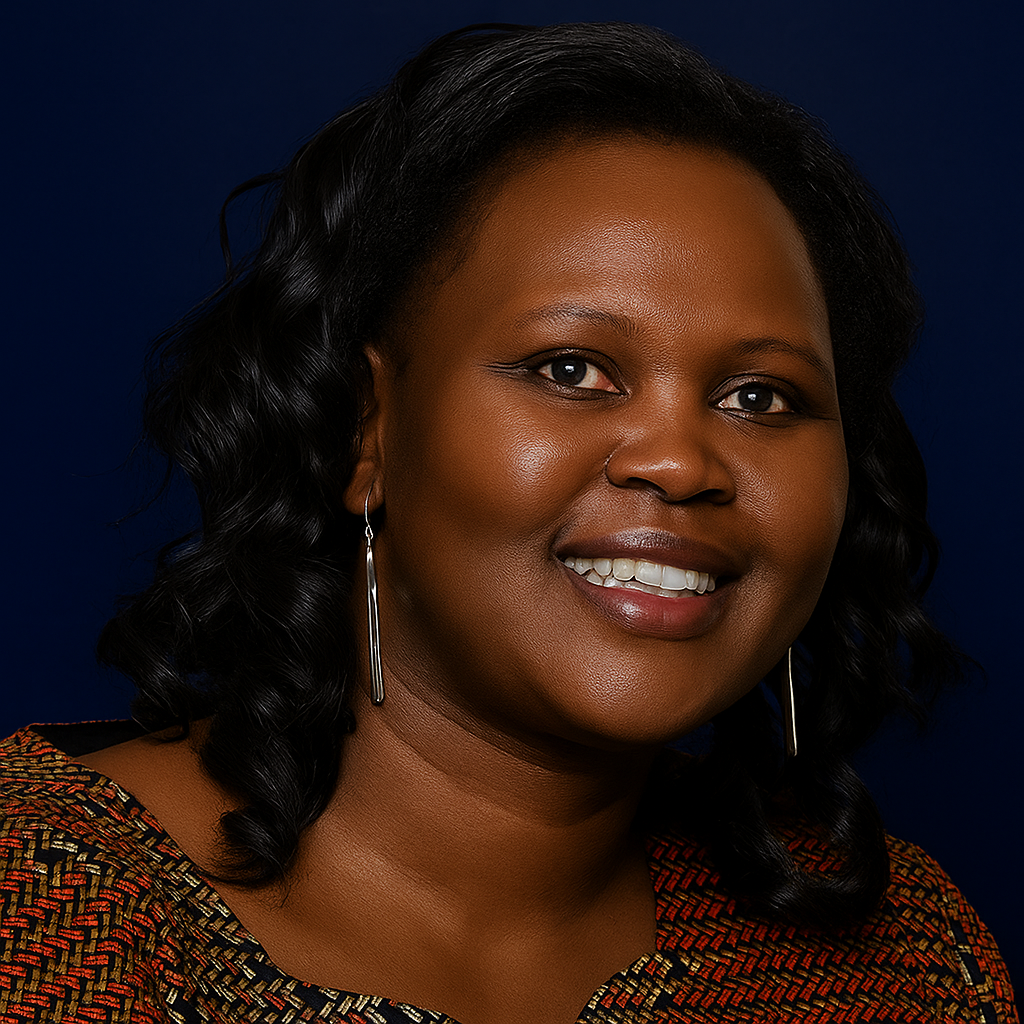

Photo | Rose Oduho
Opinion Article | Wednesday, 4 February 2026 | Rose Oduho, Civil Rights Activist and Human Rights Defender|
Recent debates triggered by remarks attributed to De Mabior Garang have reopened an old but unresolved question in South Sudan: what is the relationship between education, power, and legitimacy?
At face value, the argument that a PhD does not automatically qualify someone for political leadership is neither radical nor wrong. Politics is not an academic seminar. It demands judgment, accountability, courage, and service to the people—qualities that no credential alone can guarantee. Read in this context, the statement is reasonable, especially if the original question concerned whether academic qualifications alone produce political leaders.
However, the intensity of the reaction reveals something deeper than disagreement. It exposes a long-standing crisis in how South Sudan relates to titles, authority, and knowledge.
A PhD is not merely preparation for teaching or peer review. It represents disciplined training in analysis, systems thinking, and evidence-based problem-solving —skills that are directly relevant to governance, policy, economics, security, and state-building. When such knowledge is dismissed outright, society impoverishes itself.
Yet South Sudan’s challenge is not simply anti-intellectualism. It is something more complex and cultural.
The “Benydit” Syndrome and the Culture of Titles
When South Sudan entered the post-CPA period, many commanders and politicians took control of the new state. During this time, a peculiar phenomenon emerged; what many of us jokingly, but tellingly, came to call the “Benydit” syndrome.
Almost everyone became “Benydit.” Tribe did not matter. Background did not matter. The title itself became a badge of status. I used to laugh when people like the photographer Lomayat would jokingly refer to himself as Lomayat Dit, or when others added “Dit” to their names. Beneath the humor, however, lay a serious reality: titles had become a currency of power rather than competence.
Over time, this culture expanded beyond education. Being “Benydit” began to determine who speaks first, who speaks last, who is heard, who is dismissed, protocol, seating, and access. It became, in effect, a way of ruling a nation through hierarchy instead of service.
In this environment, many PhD holders who genuinely wished to contribute expertise found themselves sidelined; not because they lacked ideas, but because they were not part of the political Benydit class that controlled the state. Ironically, political Benydit often did not care whether one held a PhD or not; power, not knowledge, was decisive.
At the same time, some within academia also fell into title consciousness. Failure to say “Dr. So-and-so” could cause offense. In debates, credentials were sometimes used to silence rather than enlighten. This mutual fixation, political and academic—produced superiority on one side and resentment on the other.
The outcome has been predictable: anti-intellectualism, dismissal of expertise, resentment between PhD and non-PhD holders, and the paradox of politicians governing without evidence while scholars speak without influence.
I write this as an observer. I do not hold a PhD. I do not claim academic superiority. These are observations shaped by years of engagement and by living in both South Sudanese and Western intellectual cultures. In many Western universities, professors do not insist on titles; students debate them freely; ideas stand or fall on merit. Humility there is a sign of confidence, not weakness.
South Sudan’s debates, especially on social media, often punish disagreement and elevate titles over substance. This is not intellectual rigor, it is insecurity disguised as authority.
This is why some of us did not interpret De Mabior’s remarks as hostility toward PhDs. Without seeing the original question, it is unfair to assume contempt. If the issue was whether credentials alone produce political legitimacy, then the response is reasonable.
The real tragedy is not that scholars feel dismissed or politicians feel threatened. It is that we have failed to cultivate humility on both sides.
Nation-building is not a competition of degrees. It is a collective task that requires knowledge, leadership, humility, and mutual respect—working together.
The opinion expressed in this article does not represent the position and stance of this news outlet.